Ebola's 2026 Surge
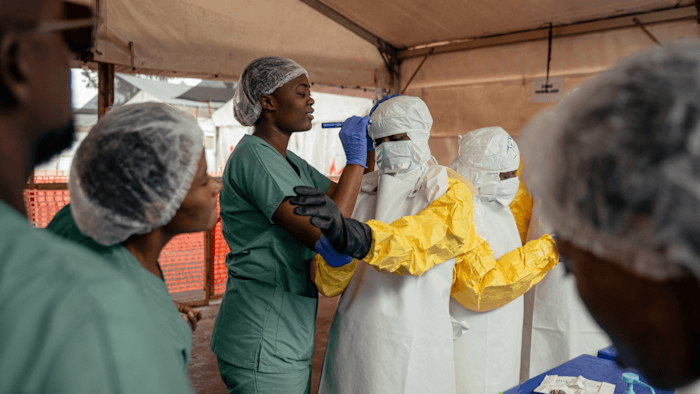
The Bundibugyo Ebola outbreak in DR Congo and Uganda is now the third-largest Ebola outbreak ever recorded, with 1,274 confirmed infections and 360 deaths across Ituri, North Kivu, and South Kivu. Uganda has reported 20 cases, and France has confirmed one imported case.
But unlike previous crises, this outbreak is unfolding in a region with far more surveillance, laboratory capacity, and cross-border coordination than existed even five years ago.
1. DR Congo's Public Health Measures: Rapid Containment, Even Amid Politics
DR Congo has banned mass gatherings in Kinshasa, Tshopo, Haut-Uele, and Bas-Uele - a preventive move to slow potential spread from the east. Opposition parties argue the ban is political, but the health rationale is clear:
- A doctor who later tested positive in France transited through Kinshasa.
- Case numbers jumped by 47 in one day.
- Ituri accounts for 90% of infections, and neighboring provinces are high-risk corridors.
The government also ordered 21-day quarantine rules for travelers leaving affected provinces - mirroring WHO's recommended incubation window. This is the first time DR Congo has applied capital-level restrictions before detecting a case, signaling a shift toward proactive containment rather than reactive crisis management.
2. Africa CDC: Trials for New Antivirals Begin This Week
Africa CDC confirmed that clinical trials for new antiviral drugs could begin within days. This is a major pivot from past outbreaks, where Africa relied almost entirely on external R&D pipelines.
- Bundibugyo has no licensed vaccine, so therapeutics are the frontline tool.
- Africa CDC is coordinating with ministries to ensure trials follow rigorous, locally led protocols.
- This marks one of the first times Africa CDC is leading therapeutic deployment during an active outbreak, not just supporting it.
This is health sovereignty in action.
3. Regional Preparedness: Uganda's Kampala Response Shows System Maturity
Uganda detected its first cases in Kampala, one of Africa's busiest capitals. Yet transmission has remained limited due to rapid isolation protocols, lab networks strengthened after the Sudan Ebola outbreak, airport exit screening supported by CDC and Africa CDC, and community surveillance units trained over the past decade. Uganda's containment performance is one of the strongest indicators of regional resilience.
4. U.S. CDC Level 1 Activation: What It Means for Africa
The U.S. CDC raised its response to Level One, its highest designation - used only for crises like Zika, West Africa Ebola, and H1N1. This matters for Africa because Level One unlocks $107M in emergency funding, 19 CDC deployers supporting over 125 staff already in DRC and Uganda, 2,500 diagnostic tests being prepared for deployment, monoclonal antibody doses for therapeutic trials, expanded airport exit screening, and data analysis and epidemiology support for ministries.
This outbreak requires an aggressive, multi-pronged approach focused on rapidly identifying and isolating cases, supporting testing, strengthening infection prevention and control, tracing contacts, and facilitating safe and dignified burials.
This is not charity - it's global risk reduction. Containing Bundibugyo in DRC reduces risk everywhere.
5. The Economics of Containment: Why This Outbreak Is a Stress Test for Africa's Health Systems
Ebola outbreaks are not just biological events, they are economic shocks. This outbreak is testing border health systems, laboratory networks, surveillance infrastructure, political coordination, community trust mechanisms, and supply chain resilience. But unlike 2014, Africa now has Africa CDC coordinating therapeutics and diagnostics, regional genomic surveillance, cross-border response protocols, local epidemiology training pipelines (DRC alone has trained 1,000+ field epidemiologists), and digital reporting systems that detect anomalies faster.
Closing Thought
Ebola is spreading fast, but so is Africa's ability to contain it. The story of 2026 is not just about rising case numbers - it's about maturing systems, regional coordination, and African-led innovation. If Africa sustains this momentum, the continent could redefine how high-threat pathogens are managed - shifting from dependency to capability.
What would it take for Africa to build a permanent, continent-wide outbreak response force - one that activates instantly when threats like Bundibugyo emerge?
Sources: CDC Ebola Response Transcript (June 26, 2026); Africa CDC Newsday Interview; WHO Situation Updates; BBC Africa reporting; Reuters Health reporting on CDC Level 1 activation.